

By YI Team
Every parent knows the routine. Remind your child to finish their homework. Ask them to put away their toys. Remind them again to clean their room. And, just when you think everything is done, discover that something else has been forgotten.
For many Indian families, the challenge isn’t that children are unwilling to help. It’s that everyday responsibilities haven’t yet become habits they can manage independently.
Between school, tuition classes, extracurricular activities and digital entertainment, children have plenty competing for their attention. Parents, meanwhile, can find themselves becoming full-time reminders for even the smallest responsibilities.
But what if the solution isn’t reminding children more often? What if it’s helping them build routines they understand, participate in and gradually take ownership of?
Building good habits in children doesn’t require a perfect timetable or a reward for every action. It starts with small, realistic steps that make responsibility a normal part of family life.
Why Good Habits Matter Beyond Academic Success
Children learn much more at home than what appears in their schoolbooks.
Making their bed, organising a study table, watering plants or helping prepare a family meal may seem like ordinary tasks. Yet these activities create opportunities to practise responsibility, planning, cooperation and independence.
A five-year-old who puts toys away is beginning to learn how to care for personal belongings. A ten-year-old who follows a reading routine is practising consistency. A fifteen-year-old who plans their study schedule is developing skills they may use well into adulthood.
The American Academy of Pediatrics explains that predictable family routines help provide structure, while still allowing flexibility and age-appropriate choices.
The goal is not to turn childhood into a checklist. It is to help children become comfortable taking responsibility for small parts of their own lives.
Why Constant Reminders Don’t Always Work
Imagine asking a child to clean their study table every evening.
On Monday, you remind them three times. On Tuesday, you do it yourself because everyone is running late. On Wednesday, the child finishes it only after an argument.
The problem may not be the task itself. The expectation changes from day to day, and the child depends on a parent to initiate the activity.
A more useful approach is to create a clear routine.
Instead of saying, “Why haven’t you cleaned your table yet?”, a parent might agree with the child that the table will be tidied for five minutes before dinner.
That makes the task specific, manageable and predictable.
Children also need to understand what completion looks like. “Keep your room clean” is broad. “Put your books on the shelf and clothes in the cupboard” is much easier to follow.
These small changes can reduce confusion and create opportunities for children to act with less prompting.
Five Everyday Habits Worth Encouraging
There is no single list of habits that suits every child. Their age, interests, abilities and family circumstances all matter.
However, five categories offer a useful starting point.
1. Personal Responsibility
Encourage children to manage age-appropriate tasks such as packing their schoolbag, keeping their belongings organised or preparing their clothes for the next day.
Start with something simple, demonstrate it when needed and gradually let them take the lead.
2. Reading and Curiosity
Reading doesn’t have to be limited to textbooks.
Stories, comics, biographies, science magazines and books about a child’s favourite hobby can all encourage curiosity. Even discussing one interesting thing they learned can become a meaningful family routine.
For younger children, reading together may work better than expecting independent reading.
3. Helping at Home
Family responsibilities help children understand that a household works through shared effort.
Younger children might sort toys or water a plant. Older children might organise groceries, help prepare a simple meal with supervision or take responsibility for a particular household task.
The activity should fit the child’s age and be carried out safely.
4. Creativity and Offline Exploration
Drawing, gardening, crafting, playing outdoors and trying new skills give children opportunities to explore beyond passive digital entertainment.
Parents don’t need elaborate equipment or expensive activities. A sheet of paper, a few colours and fifteen minutes of uninterrupted attention can be enough to begin.
Instead of treating screens as the enemy, families can focus on making appealing offline activities a regular part of the day.
5. Financial Responsibility
Children can begin learning about money through everyday conversations.
Why do we save? How do we decide between something we want now and something we want later? What does it mean to work towards a goal?
An older child saving for books or a bicycle may start to understand how small contributions accumulate over time.
The lesson should be about thoughtful choices, patience and planning—not simply paying children to behave.
Make Habits Small, Visible and Achievable
One reason ambitious routines fail is that families try to change too much at once.
A child who rarely reads independently may struggle with a sudden goal of reading for an hour daily. Starting with ten minutes is more realistic.
The same principle applies to organising a room, helping in the kitchen or completing a creative activity.
Parents can make the process easier by:
- Choosing one or two habits initially rather than creating a long list.
- Agreeing on what the child is expected to do.
- Connecting the activity to an existing part of the day.
- Letting the child make suitable choices.
- Reviewing progress together without making every missed day a failure.
A simple weekly chart or routine tracker can help children see their progress.
Over time, responsibility should gradually shift towards the child, while the parent remains available for encouragement and support.
Recognition Matters More Than Constant Pressure
Children often respond positively when their effort is noticed.
Rather than offering only general praise, try recognising a specific action:
“You remembered to put your books away without being asked.”
Or:
“You kept practising your drawing even when it was difficult.”
The US Centers for Disease Control and Prevention recommends specific praise as one way to reinforce positive behaviour. Its guidance also discusses using simple reward systems thoughtfully.
Rewards can sometimes make a new routine more engaging. But not every good deed needs a monetary value.
Quality time, choosing a family activity, encouragement and a sense of achievement can all be meaningful forms of recognition.
The longer-term aim is for children to value the habit itself, not only the reward attached to it.
Can Technology Help Children Build Offline Habits?
Technology often gets blamed for distracting children. But used intentionally, it can also help families organise real-world activities.
A digital tool cannot replace a parent’s involvement or the experience of actually doing something. What it can do is make expectations clearer and progress easier to follow.
For example, a family might use a shared routine system to record a reading activity, track a recurring responsibility or recognise that a child has completed an agreed task.
The important distinction is that the meaningful activity happens away from the screen. The technology provides structure around it.
One example is UpZi, an Indian family-focused app designed to connect everyday tasks, rewards and savings.
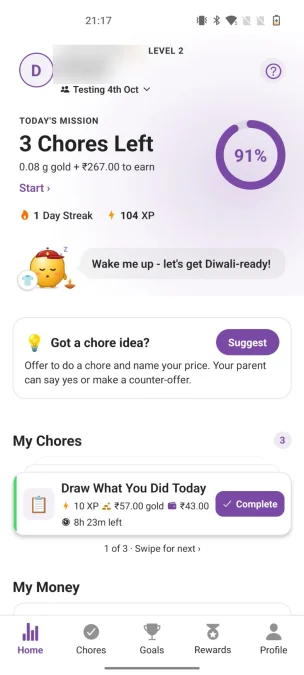
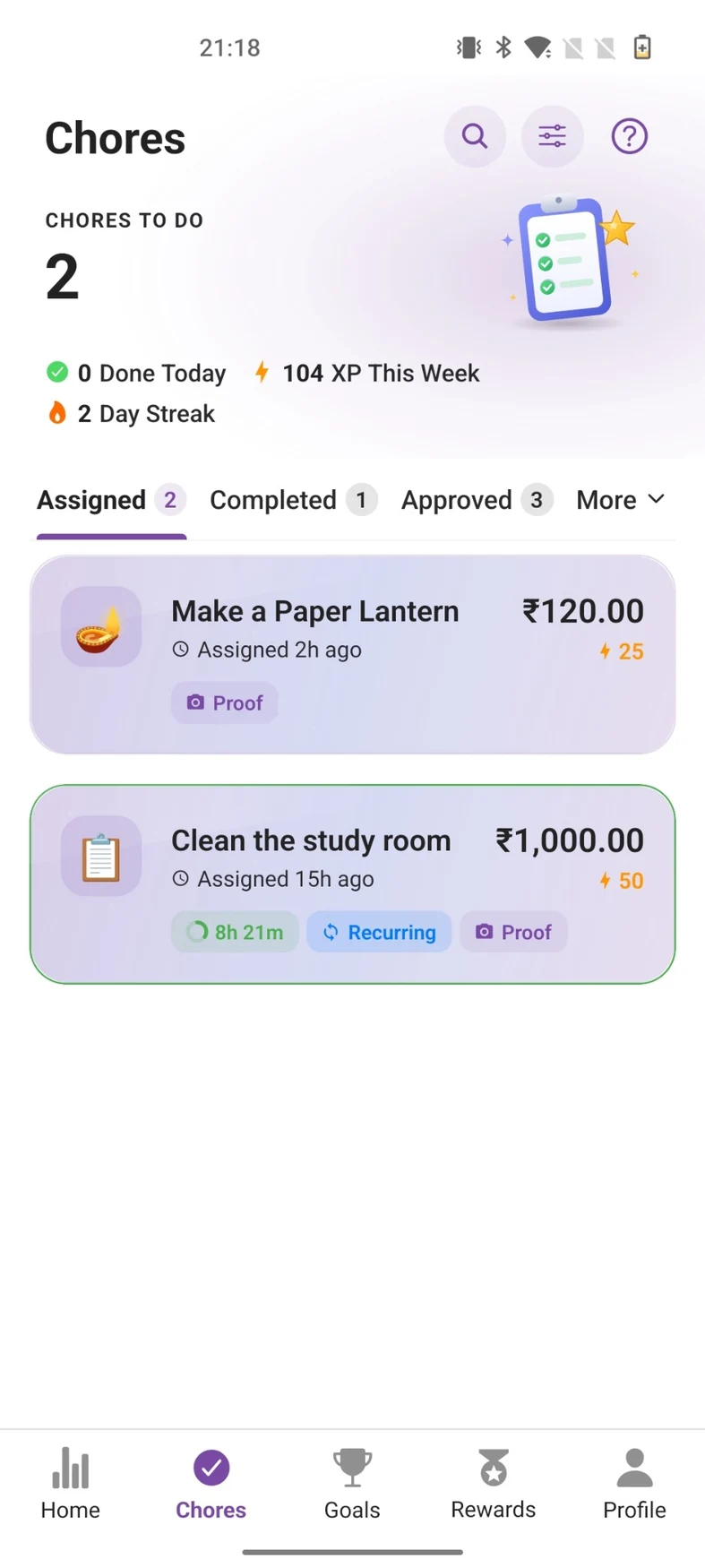
With UpZi, parents create age-appropriate tasks such as cleaning a study area, drawing, reading or helping with household activities. Parents decide the expectations, deadline and rewards. Children can see their assigned activities and submit proof of completion where required, while parents review and approve the work.
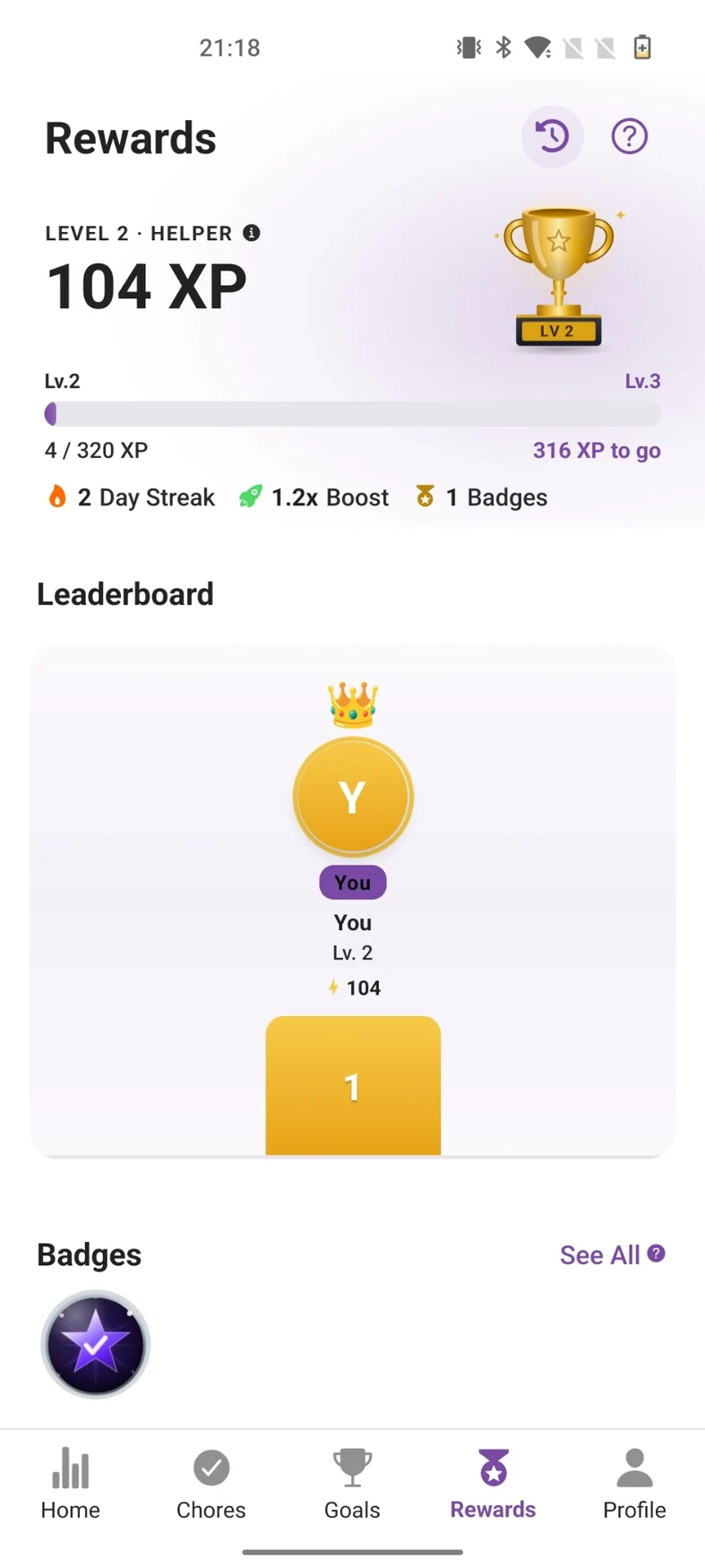
The app also includes XP, levels, streaks and badges to make progress visible. These are motivational features rather than money.
For families who choose monetary rewards, UpZi allows parents to specify a portion for digital gold savings and another as a pocket-money promise. The app tracks the cash amount, while actual pocket money is paid by the parent outside the app. Gold transactions and savings controls remain with the parent.
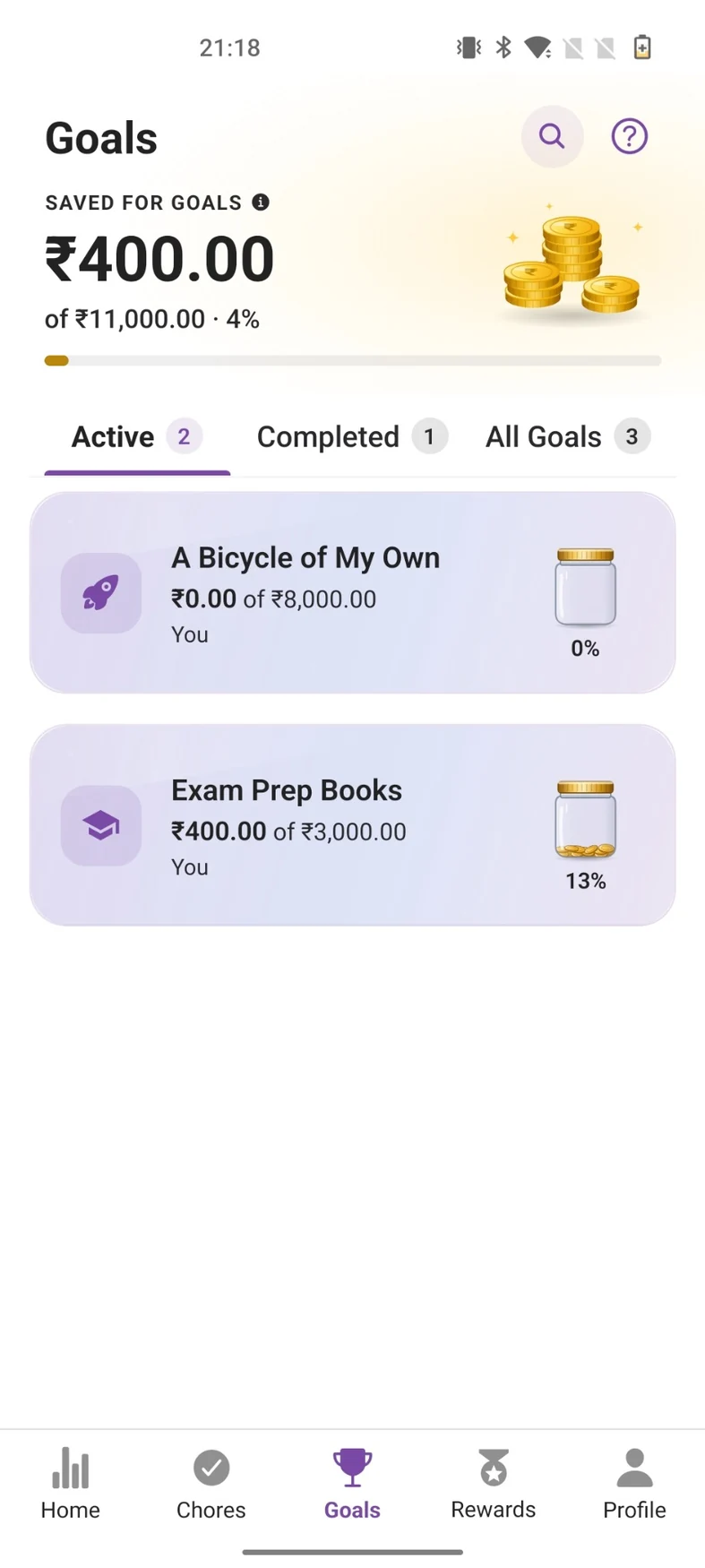
Parents can also set savings goals, helping children connect individual efforts with longer-term objectives such as books or a bicycle.
The underlying idea is straightforward: use a little technology to encourage more meaningful action in everyday life.
Available on Google Play and the Apple App Store.
A Simple Seven-Day Habit Challenge for Families
Families do not need to download an app or create an elaborate system to begin.
Try this seven-day exercise with your child.
- Day 1: Choose one small responsibility your child can manage independently.
- Day 2: Agree on when it should happen and what successful completion looks like.
- Day 3: Let your child take the lead, offering help when necessary.
- Day 4: Add an enjoyable activity, such as drawing, reading or gardening.
- Day 5: Recognise a specific effort, even if the result is not perfect.
- Day 6: Ask your child what they enjoyed and what they found difficult.
- Day 7: Review the week together and decide whether to continue the routine.
Avoid treating a missed task as a reason to abandon the entire process. Children benefit from opportunities to practise, make mistakes and try again.
For younger children, this might mean one simple activity each day. Older children can take part in setting expectations and reviewing their own progress.
Raising Responsible Children Is a Process, Not a Race
Parents want their children to become confident, capable and responsible individuals. Yet those qualities rarely develop through reminders alone.
They grow through ordinary experiences: making a small commitment, following through, helping another person, learning from mistakes and recognising progress.
Good habits don’t have to begin with dramatic changes. They can start with a ten-minute reading routine, a tidier study table or a little more involvement in family life.
Whether a family uses a paper chart, a conversation at dinner or a digital tool like UpZi, the principle remains the same.
Give children opportunities to take ownership, acknowledge their efforts and make everyday responsibility something they can grow into.
Because the habits that shape adulthood often begin with the smallest moments of childhood.
Further reading
- American Academy of Pediatrics — The Importance of Family Routines
- US Centers for Disease Control and Prevention — Tips for Using Praise and Rewards



Good habits begin with small, everyday actions! 🌱
At UpZi, we believe that building responsibility, independence, and positive habits in children starts with meaningful real-world experiences.
Thank you, Young Influx, for highlighting a topic so relevant to today’s parents. Together, let’s encourage a generation that grows through good habits, one small step at a time! 💙
#UpZi #GoodHabits #PositiveParenting